

$166,162 purchase price. $4,000 to the listing side. On a condo that didn’t have enough equity to pay anybody.
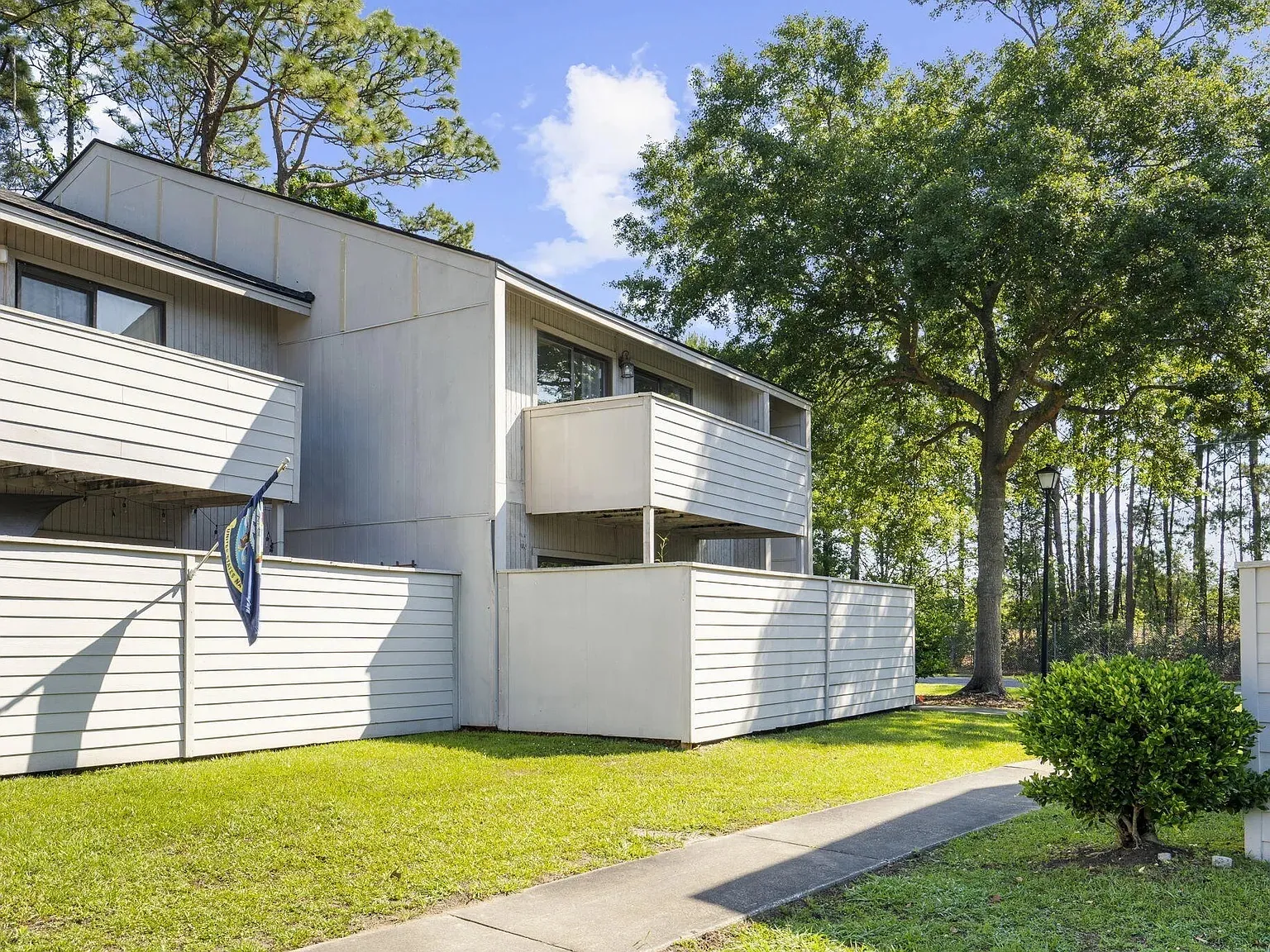
208 Greencastle Drive, Unit 608, Goose Creek, South Carolina. A subject-to file, offer out.
The unit had been listed for months and had taken two offers, both under the payoff.
That isn’t a pricing story. The seller owed $162,162.38 on a 1980s condo worth about what she owed, and the arithmetic in the middle is what killed it. Any conventional sale that actually cleared the loan had to also cover a commission and closing costs, and there was nothing in the building to cover them with. The best outcome available to her was to sell the condo and write a check for roughly nine thousand dollars for the privilege.
She wasn’t in a position to do that, which is why she was selling.
The agent was carrying the file with no path to getting paid. He could push her toward a short sale, where the lender decides what he earns and the seller’s credit takes the damage. He could keep the listing alive and hope. Or he could let it expire.
This is the listing every agent has sitting in a drawer. It isn’t overpriced and no amount of open houses moves it. There is simply not enough money in the property to pay everyone who has to get paid.
Both offers were fine offers. Neither one solved her problem, because her problem was never the sale price.
She had relocated for work and was carrying the condo payment on top of rent in another city. What she needed was to stop paying $1,352.48 a month on a place she no longer lived in, without a foreclosure or a short sale sitting on her credit for the next seven years.
A cash buyer at $158,000 doesn’t do that. It hands her a shortfall and a lender negotiation. Every offer on that listing was competing on a number that, at her equity position, could not be made large enough to matter.
We got her on the phone and asked what she needed to walk away from, rather than what she wanted for the unit.
The answer was the payment and the credit. In that order. She had no expectation of a payout and said so directly, which made the conversation short and made her a real candidate rather than a wish.
That reframed the file. If nobody needs to be paid equity, then the equity gap stops being the obstacle. The only question left is whether the loan on the property is worth taking over.
The seller deeds us the property. Her existing mortgage stays in her name and stays in place, and we take over the payments from closing forward. The loan is never paid off and never refinanced.
Which makes the note itself the asset we’re actually buying. Hers carries 5.625% against a market sitting near 6.5%. That spread cannot be purchased at a bank at any price, and it is the entire reason this file is worth working while most of what crosses our desk at 7% is not.
The offer runs off a fixed formula. Cash at close is 2.5% of the outstanding balance, rounded down to the nearest thousand. Purchase price is the balance plus that cash.
Then the one-percent test, which is the check that saves you from yourself. If the monthly payment approaches 1% of the balance there’s no cash flow left in the deal and we walk regardless of how good the rate looks. One percent here is $1,621.62 against a payment of $1,352.48. It clears by $269 a month, which is margin rather than a rounding error.
Then the part that matters most to the person reading this. That $4,000 is not a seller credit or a repair allowance. It is written into our offer as commission to the listing side. On a property with no equity in it, the buyer funds the agent’s check, because nobody else in the transaction has money to fund it with.
Here is what could still kill this, and it isn’t the rate or the payment.
It’s a condo, and our hard limit on association dues is $200 a month. Above that, the file is dead on arrival no matter how good everything upstream looks, because the dues ride on top of a payment somebody has to carry every single month for as long as we own it.
We don’t have that number yet. At a building of this age in this market, $250 is entirely plausible, and $250 ends it.
There are two more open questions behind it. Rental comps for the complex need to support $1,500 to $1,700 a month, and we need to read the association’s rental restrictions, because a building that caps or prohibits leasing removes the exit completely. A property you cannot rent and cannot easily resell isn’t an asset. It’s a payment you volunteered for.
That’s why this file grades out at a D and scores 45 despite passing every screen we run. Three unanswered questions on a condo outrank four clean levers, and we’d rather find that out now than at a closing table.
The screen came first, and most of it is disqualification rather than analysis.
Four things get looked at before anything else. Whether an investor will actually want the property, which is where the dated 1980s interior costs this file $2,000 off the cash we’d otherwise put up. Population, where we won’t work a market under 30,000 and Goose Creek at 47,000 sits comfortably inside the band. The payment, where under $2,000 is clean and over $4,000 is automatic. And the rate against market, which is the only reason we’re still reading.
Then the kill rules, which end a file rather than adjust it. Active foreclosure or an accelerated loan. Payment over $2,900. HOA over $200. Anything under 5,000 people and more than fifty miles from a metro. We also stay off VA paper because of the seller’s entitlement, treat FHA carefully for due-on-sale exposure, and won’t touch construction or hard-money loans at all, since they aren’t assumable and never will be.
Greencastle cleared three of the four kill rules on the first pass. The fourth is the HOA, and it’s still open.
For context on how that discipline runs: we killed a file in Charlotte the same week with a 2.5% rate on it, which is a better rate than this one by a wide margin. The loan had been accelerated and foreclosure initiated. That’s an automatic dead under our own rules and the rate didn’t earn it a phone call.
The mechanics are worth spelling out, because agents who haven’t done one of these usually assume it’s more exotic than it is.
It closes at a title company like any other transaction. The seller signs a deed conveying the property. The existing loan is not touched, not paid off, and not called in at the table. It stays exactly where it is, in her name, and the servicer keeps sending statements to the same place.
The escrow account rides with the loan, currently sitting at $1,816.27 with the account paid current. From closing forward the payment comes from us. The first one has to land before the late fee date on the statement, and after that it’s an automatic monthly draft rather than a thing anyone has to remember.
We take a limited power of attorney so we can speak to the servicer about the loan, rewrite insurance with our interest on the policy, and put the account on autopay before anyone leaves the room. The $4,000 disburses to the listing side on the settlement statement the same as any commission would.
None of that is unusual. The unusual part happened before closing, in the conversation where somebody asked her what she actually needed.
The seller stops paying $1,352.48 a month on a property she left months ago, writes no check at closing, and keeps the credit that a short sale or a foreclosure would have cost her for the better part of a decade. She gets no payout, and we told her that in the first ten minutes instead of the fourth week.
The listing agent gets paid $4,000 at closing on a file that was never going to pay him. Funded by the buyer, disbursed at the table, on a listing whose realistic alternatives were an expiration or a short sale where the lender sets his commission for him.
We acquire a below-market note we could not have gotten from a lender, on a unit in a market with enough population to exit into. These are not large transactions. They run around $5,000 apiece and they only work as volume, which is exactly why we can’t afford to be slow or vague about the files that don’t qualify.
Because nobody tried to solve the equity gap.
Two buyers spent months making offers on a property where the price was never the obstacle. The seller’s problem was a monthly payment and a credit report, and once you build for that instead, the fact that there’s no equity in the building stops mattering. It’s the one deal shape where the money to pay the agent comes from the buyer, which is why we want the listings that have been sitting.
The file is out for signature at $166,162.38 with $4,000 at close to the listing side. It might still die on the HOA dues. We’d rather tell you that now than come back in three weeks with a story about how it was always going to close.
Have a listing where the payoff eats the commission? Send the payoff amount, the interest rate, and the monthly payment. That’s enough for an answer, usually the same day, including when the answer is no.
Provided for informational purposes. Not tax, legal, or investment advice. Subject-to transactions carry risk for both parties, including due-on-sale exposure, and any seller should review the structure with their own attorney before entering into it.