

$294,000 cash. Twelve days. On a house three siblings had been trying to sell for ninety.
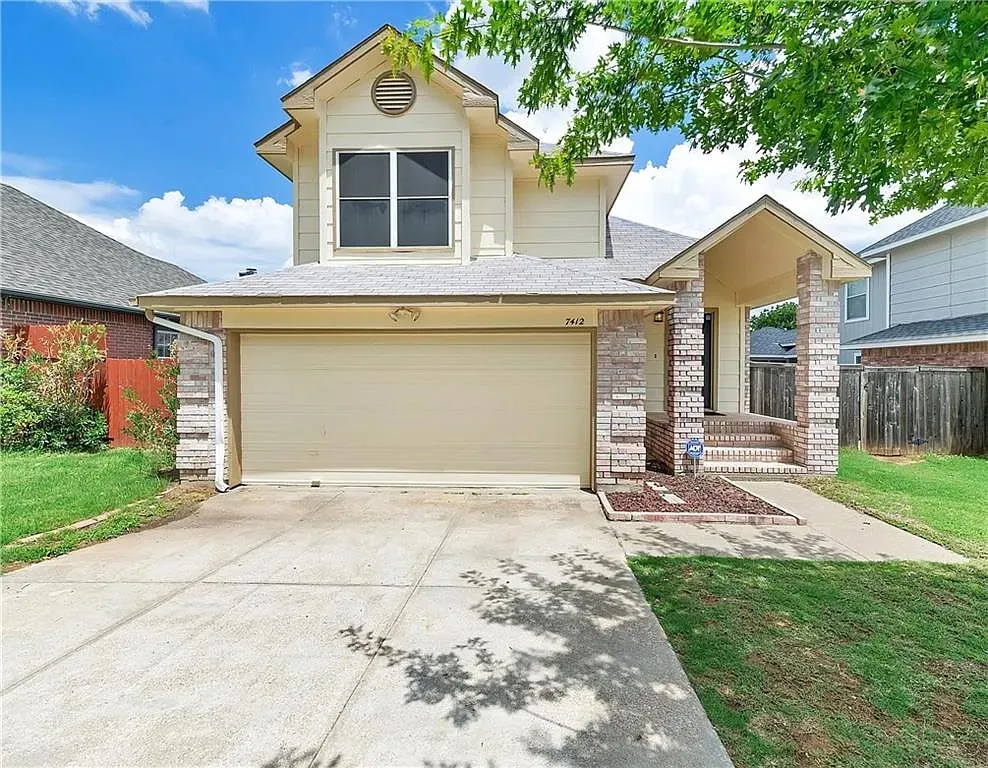
Fort Worth, Texas. An all-cash close on an inherited property, Tarrant County.
Three siblings inherited a brick ranch in west Fort Worth. Their mother had owned it outright since the seventies, so there was no mortgage on it and no lender in the picture. On paper it was the easiest kind of listing there is.
It sat for ninety days.
The house needed a roof, an HVAC system, and most of a kitchen. Retail buyers walked. The offers that did come in were from investors at numbers the siblings found insulting, and two of the three lived out of state, which meant every decision took a week and a group text.
The agent had a listing with real equity in it, motivated sellers, and no way to get anyone to yes.
We came in on terms first, because on a free and clear property that’s usually where the money is. Full price, or close to it, with a down payment at closing and the balance carried over time. On a house like this the seller typically ends up well ahead of any cash offer.
We opened at 35% down against $420,000. They came back wanting 55%.
We can go to 50% on the right file. We couldn’t go to 55%, and honestly, the down payment was never the real problem.
The real problem was that there were three of them.
A carried note has to be split three ways and administered for years. Two of the siblings had no interest in being anybody’s lender, particularly a stranger’s, particularly on a house eleven hundred miles away. If one of them wanted out in year two, the note had to be unwound or bought out by the other two. And the whole thing depended on three people who already needed a week to answer a group text agreeing on how to handle a missed payment.
Terms are a good answer for one seller with time. They are a poor answer for three heirs who want to be done with each other’s business.
We stopped pushing the structure about ten minutes into the second call.
We asked what would actually make this finished, rather than what would make it lucrative.
The answer was a date. One of the three had a closing of her own coming up and needed her share in hand for it. The other two wanted the group text to end. None of them cared about maximizing the number as much as they cared about not having this house in their life anymore.
That was the whole file. They didn’t need the most money. They needed a fixed amount, on a known day, with nothing to administer afterward.
We stopped trying to sell them a note and wrote a cash offer at $294,000, which is 70% of what the house is worth repaired. It was materially less money than our terms offer would have paid them, and we said so plainly rather than letting them discover it later.
The buyer was not us. We brought in a third-party investor who took title in his own name and funded the purchase, and our compensation was recorded as a second lien against the property for $63,000, behind his position. That figure is roughly half of the equity the sellers left on the table by choosing certainty over price.
It gets paid one of two ways, at the buyer’s option: wrapped into his monthly payments, or in a lump sum at a balloon date when he refinances or sells.
Worth being direct about who pays that. The sellers don’t, and it doesn’t touch their proceeds. The buyer bought a $420,000 house for $294,000 and gave back half the spread to the party who found it and structured it. He still walked in with real equity and an asset he wanted.
This is the part agents ask about, and it deserves a straight answer.
The conventional way to get paid in the middle of a transaction like this is an assignment fee on the settlement statement. We don’t do it that way, for three reasons.
A five-figure assignment line on a closing statement is the fastest way to blow up a deal with sellers who are already nervous. It reads as a middleman taking money out of their house, even when their proceeds are identical either way, and explaining that at a closing table is a conversation nobody wins.
Second, it forces everything into one moment. The fee has to clear at closing or it doesn’t clear, which puts pressure on a file that already had a twelve-day clock on it.
Third, and this is the real reason: a recorded lien means our interests stay pointed the same direction as the buyer’s after closing. We get paid when he refinances or sells, which means we’re motivated to hand him a property that actually works rather than a property that closed.
The tradeoff is honest. We wait for the money, and we’re in second position, which means if the buyer’s plan goes sideways we’re behind him in line. That’s a real risk we take on purpose.
Not much negotiation. Almost all of the work was in title.
An inherited property doesn’t convey because three people say it should. The estate has to be clear enough for a title company to insure it, and that means the paperwork on the mother’s estate has to be in order, all three heirs have to have authority to sign, and everyone signs. On a file where two of the parties are in different time zones, that is the entire critical path.
We put the title company on it the day we went under contract instead of waiting for an option period to run. Two of the siblings signed remotely with a mobile notary. The third drove in.
The inspection was uneventful in the sense that everything we expected to be wrong was wrong. Roof, condenser, kitchen, and a water heater that should have been replaced during the previous administration. We didn’t ask for a price reduction. The number was built for a house in that condition and reopening it would have cost more days than it was worth to anyone.
We closed in twelve.
Standard cash closing at a title company, which is most of the point.
The buyer wired the full purchase price. There was no lender, no appraisal contingency, no underwriting, and nothing that could withdraw in week three. The estate conveyed, the title company cut three checks, and the commission was paid at the table out of the same funds as everything else.
Our second lien was recorded against the property at closing, in the buyer’s chain, with the payoff terms attached to it. The sellers signed nothing related to it and it appeared nowhere in their proceeds.
Twelve days from contract to funded.
The three sellers split $294,000 less commission and closing costs, roughly $92,000 apiece, on a date they picked. The sister who needed her share for her own closing had it four days early. None of them ever spoke to a tenant, a contractor, or a roofer, and none of them are still on a group text about a house in Fort Worth.
They took less than our terms offer would have paid them over time. They know that, and every one of them would do it again, because what they were actually buying was the end of the thing.
The listing agent collected a full commission at closing on a ninety-day listing that had produced nothing but low offers and stalled group decisions. He knew the closing date was real when he signed it, which on an all-cash file with no lender is a promise somebody can actually keep.
The buyer got a house worth $420,000 repaired for $294,000 plus a $63,000 obligation behind him, in a market where that spread doesn’t sit on the MLS waiting to be found.
Because we were wrong about the structure and changed it.
Seller financing was the right instinct on a free and clear house and it would have paid everyone more, including us. It was also never going to close, and the reason had nothing to do with rates or down payments. It had to do with three people who wanted to stop having a shared asset.
We spent two calls on the wrong answer and then stopped. The cash offer paid them less and solved more, and solving more is what they hired an agent to get.
That’s the judgment we’re actually selling. Anybody can bring a structure. Knowing which file gets which one, and being willing to walk away from the more profitable version of your own idea, is the part that makes an agent call you a second time.
Have a listing with equity that still won’t close? Estates, inherited property, deferred maintenance, out-of-state sellers who can’t agree. Send it over and we’ll tell you which way it should be structured, usually the same day, including when the answer is that we’re not the right buyer.
Provided for informational purposes. Not tax, legal, or investment advice. Terms vary by property, market, and seller circumstance. Sellers should review any proposed structure with their own attorney before entering into it.